Oct 4 2019 - Oct 4 2019
The Fortication Walls and the Castle of Durrës
The Fortification Walls and the Castle of Durrës
As one of the most fortified cities in the country, Durrës boasts impressive remnants of fortification walls that once surrounded the historic city, known as the Castle of Durrës. When Byzantine princess Anna Comnena laid eyes on the fortification walls of Durrës in 1107, she observed an exceptional defense system. She writes:
“Its wall is interrupted by towers which all around the city rise to a height of eleven feet above the wall.
The walls are of considerable thickness, so wide indeed that more than four horsemen can ride abreast in safety.”
The city’s fortifications have ancient roots, with early attempts at walls dating back to the 1st century B.C. However, the remains you see today were built by Anastasius I Dicorus, a Roman emperor of Durrës origin, during the Late Antiquity and Early Byzantine periods (5th–6th centuries A.D.). This project aimed to rebuild the city after the earthquake of 345 A.D. and expand existing defenses for complete protection. Dyrrhachium was designated as the capital of the province of New Epirus in the Early Byzantine period (i.e., the 4th century).
These fortifications were erected in response to barbarian raids on Dyrrhachium in the 4th and 6th centuries. In the shape of a trapeze, the walls measured around 4,400 meters in circumference and enclosed within them the 120-hectare medieval city. Dyrrhachium remained a significant port throughout the early-medieval and medieval periods, an epicenter surrounded by 22 castles. Because it was an entry point to the region, the city was often targeted by various nations, such as the Byzantines, Bulgars, Normans, and Serbians. Nevertheless, the fortification walls remained effective in safeguarding the Castle of Durrës until the Venetians took over and ruled for over a century, from 1392 to 1501.
In August 1501, the Ottoman Empire occupied Durrës and made changes to the city’s defense system. They reduced the city’s size, confining it to a smaller area inside the Late Antique wall. The newly defined area, called the Kala (Kah-lah) — meaning “castle” — was enclosed by an 800-meter-long wall, much smaller than the previous Byzantine wall. The Ottoman fortifications included towers and battlements, and two main entrances: the Big Gate and the Sea Gate, which no longer exist today. This was done under the rule of Sultan Bayazid II (1501–1512) to make the defense of the city easier and more efficient.
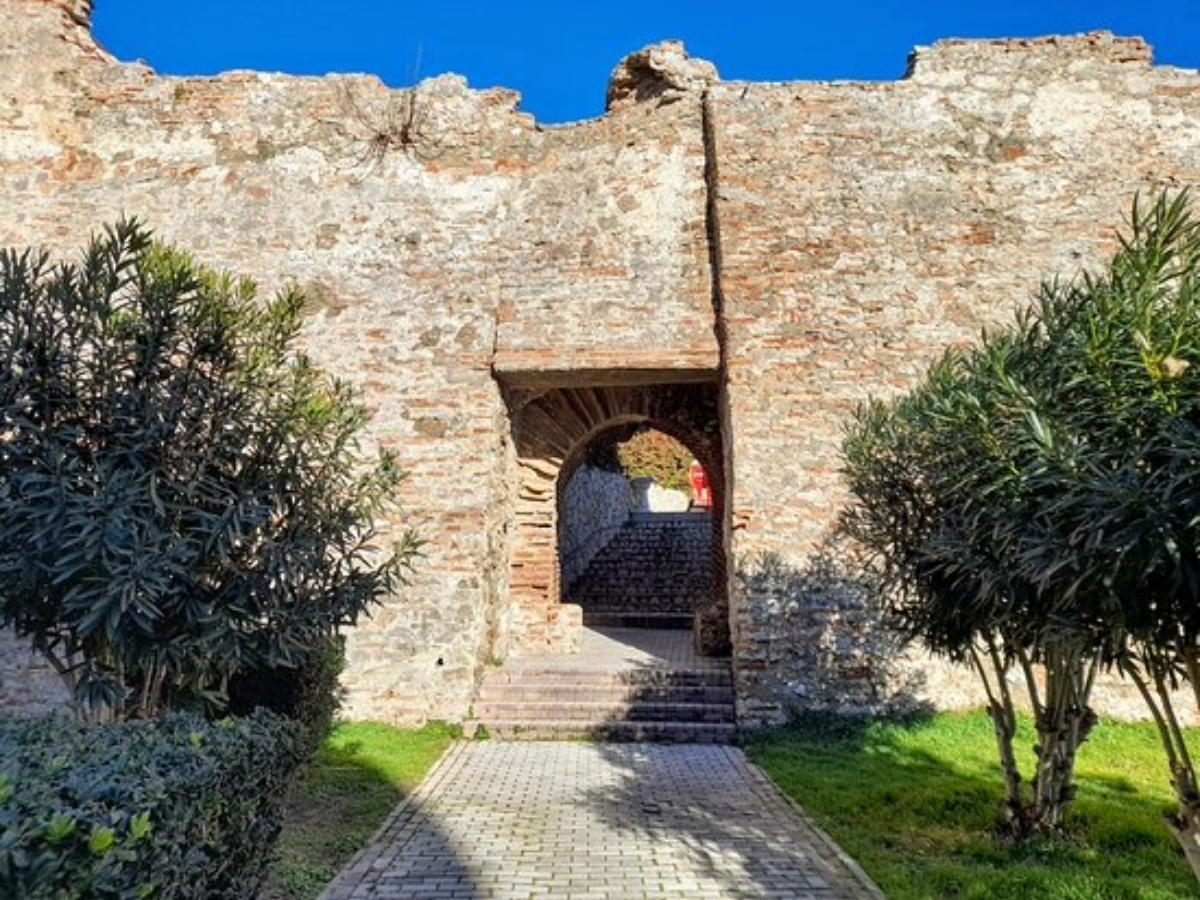
The fortification required an estimated 15 million blocks to build its entire perimeter, and the ruins of the brick-and-mortar walls can still be seen on the south and southwest sides of the city. Their height reaches up to 9 meters in some spots, but all that remains now are around 500 meters of walls, a few towers, three entrances, and a postern gate.